As the year comes to a close, our partners at the Budapest University of Technology and Economics (BME) have been cross-pollinating and speaking on citizen science, youth engagement in water quality efforts and on frameworks for sediment management and monitoring.
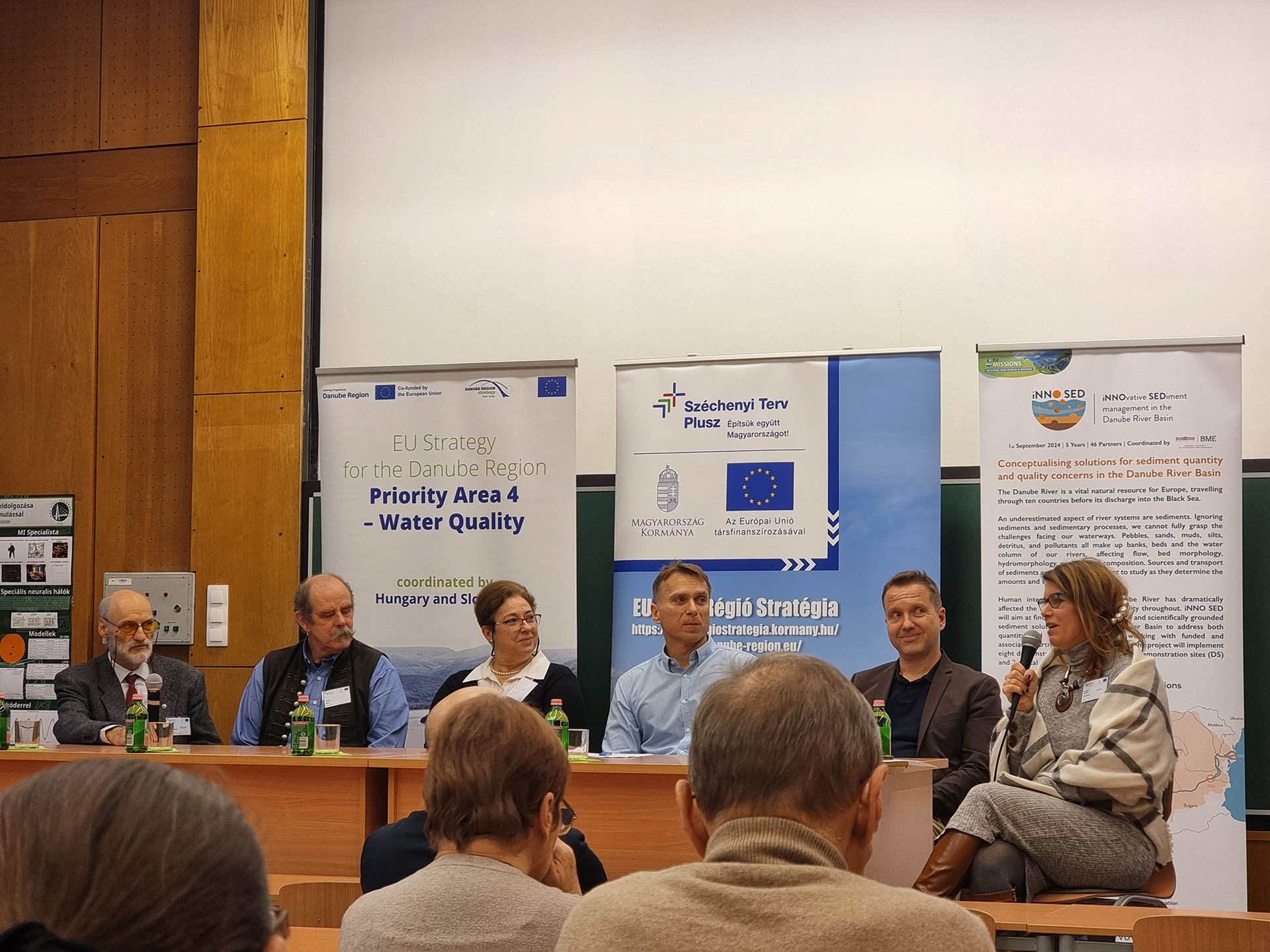
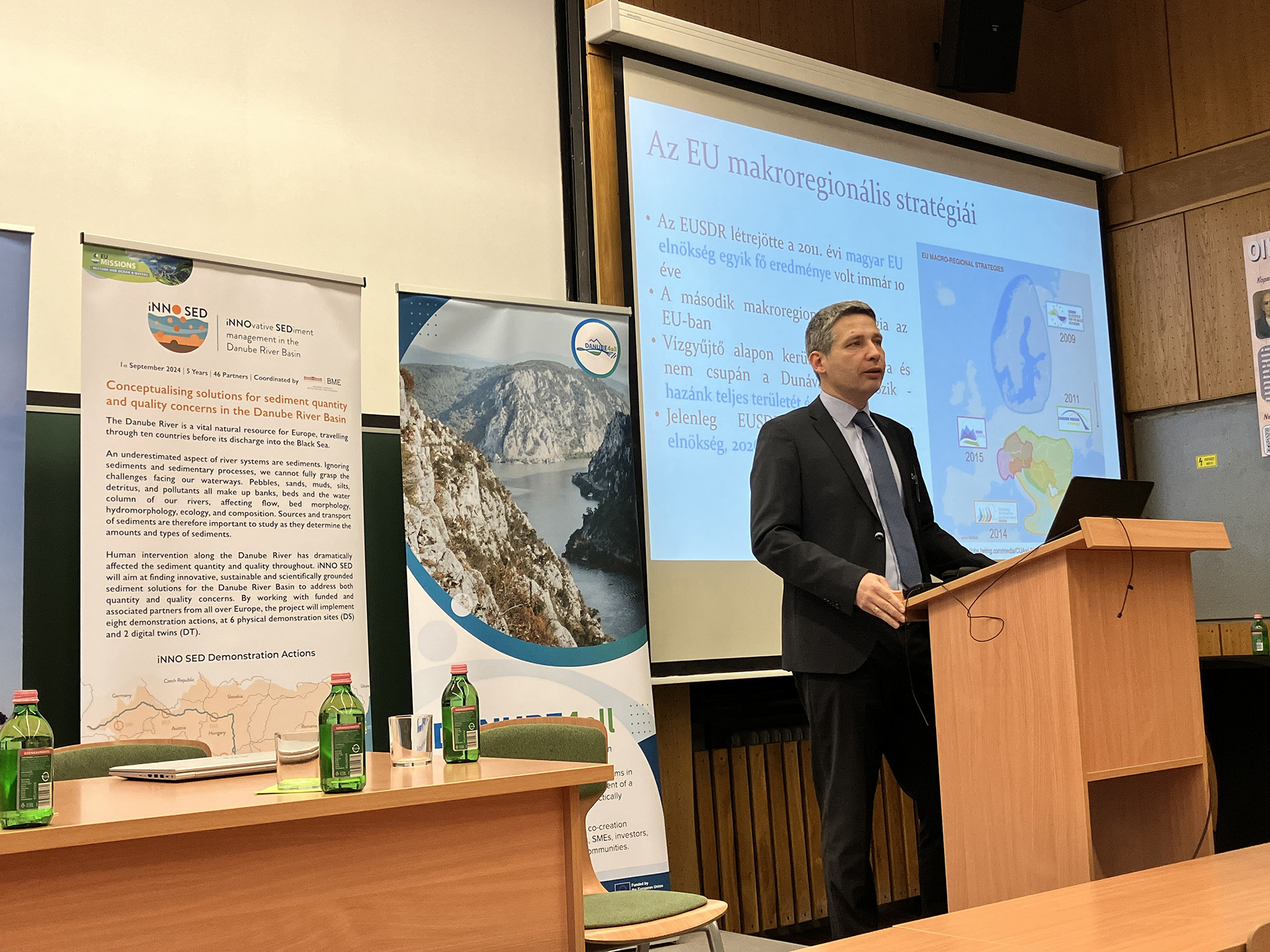
One of these opportunities took place on December 10 at the EUSDR National Hearing 2025 where many experts gathered at BME in Budapest.
This conference narrowed in on the progress and achievements of the Joint Danube Surveys (JDS5) with a deep dive into the changing conditions of the Danube. The JDS5 involves surface-water monitoring efforts along the entirety of the river – the largest of its kind in the world with sampling sites in 14 countries! Important work that has also involves plenty of citizen science initiatives across the region.
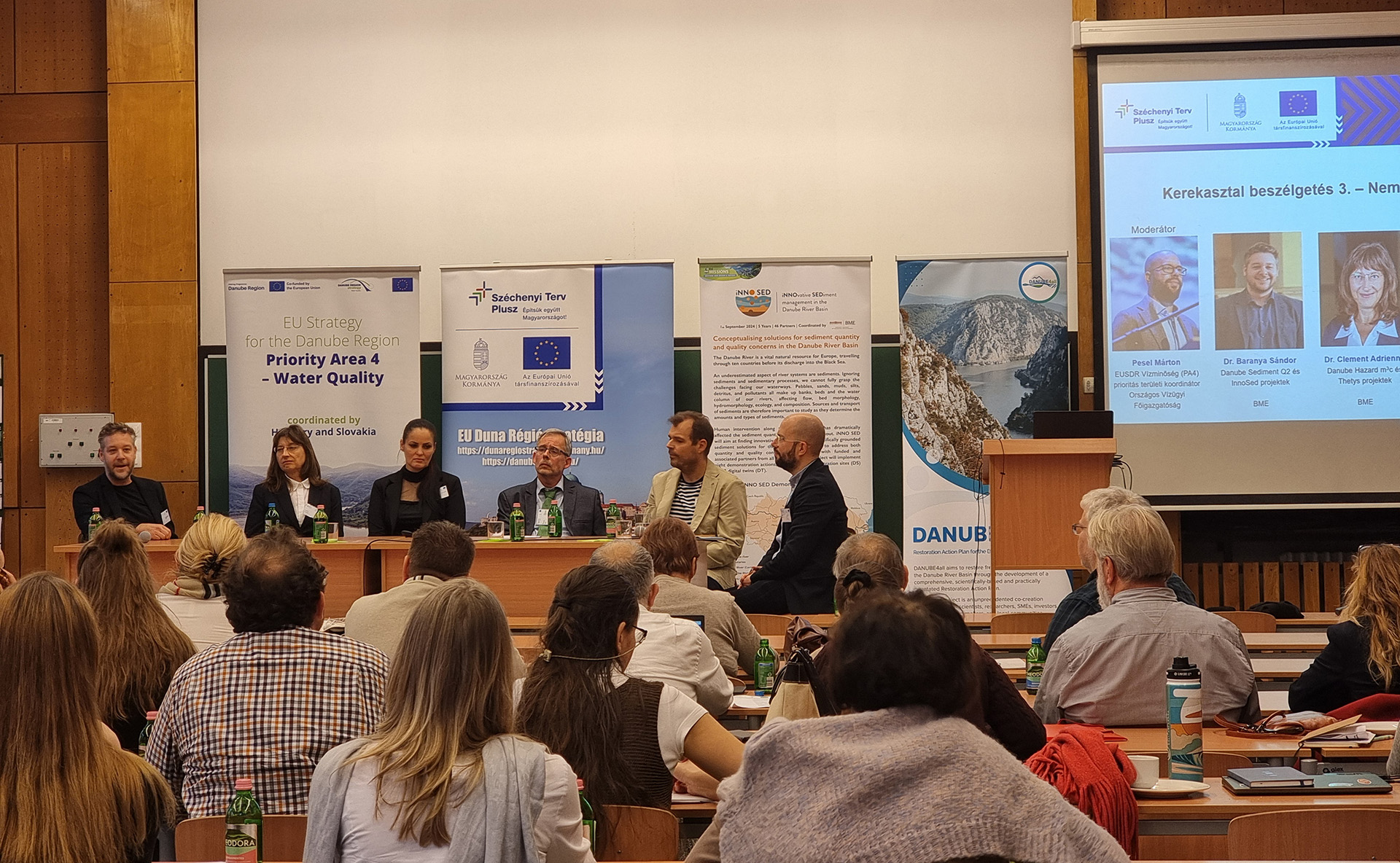
At the third roundtable discussion, our busy project lead Sándor Baranya highlighted not only iNNO SED but also our sister project DanubeSediment_Q2 that some of iNNO SED’s partners are involved in.
Like iNNO SED, DanubeSediment_Q2 also aims at tackling issues related to the management of sediment quantity and quality in the Danube; a key task involves the introduction of the harmonised HYMO (Hydromorphological) assessment method. This method has been accepted by all Danube countries, and is now being applied in the JDS5, assessing reach- and catchment-scale processes under local conditions.

In these combined efforts, iNNO SED complements existing JDS-efforts and opens new perspectives for future assessments.
These uplifting efforts happening through international collaboration show the importance of regular sampling and monitoring, widespread implementation of harmonised methods and frameworks, citizen science initiatives and the involvement of our young ones in restoring, managing and preserving the quality of the Danube River Basin!