News
Site Visit to the Vámosszabadi Section of the Hungarian–Slovak Danube
Some changes in a river can be seen immediately. Others are much less visible – even though their long-term impacts may be just as significant.
Contribution by Dr. Balatonyi László
25th September 2026
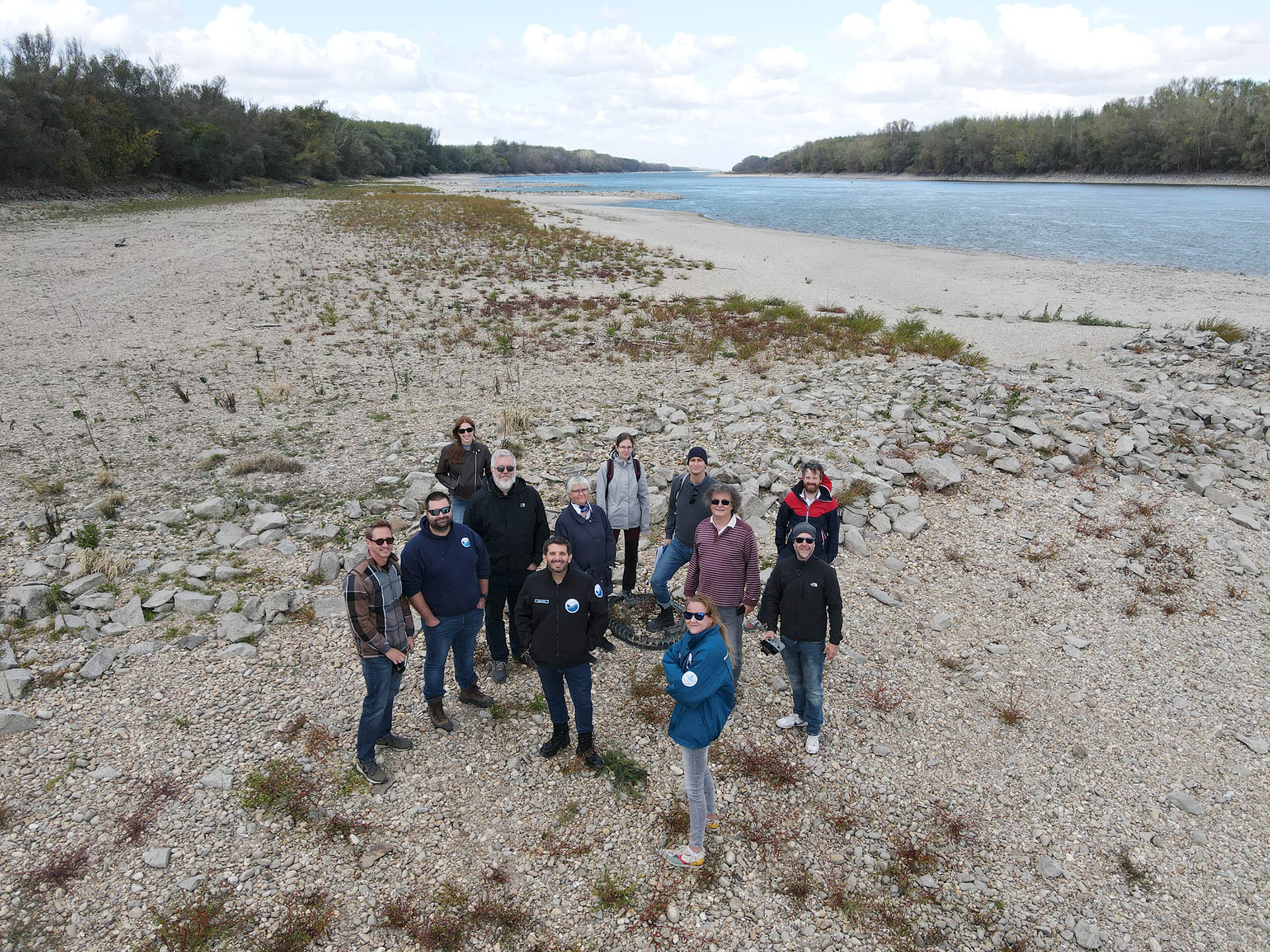
On 22nd September 2026, within the framework of the iNNO SED Project, we carried out a site visit to the Vámosszabadi section of the Hungarian–Slovak Danube. I joined the visit on behalf of the General Directorate of Water Management of Hungary (OVF/GWMD) as a project partner, together with colleagues from Budapest University of Technology and Economics, the Lead Coordinating Partner, along with experts involved in the technical preparation of the demonstration site.
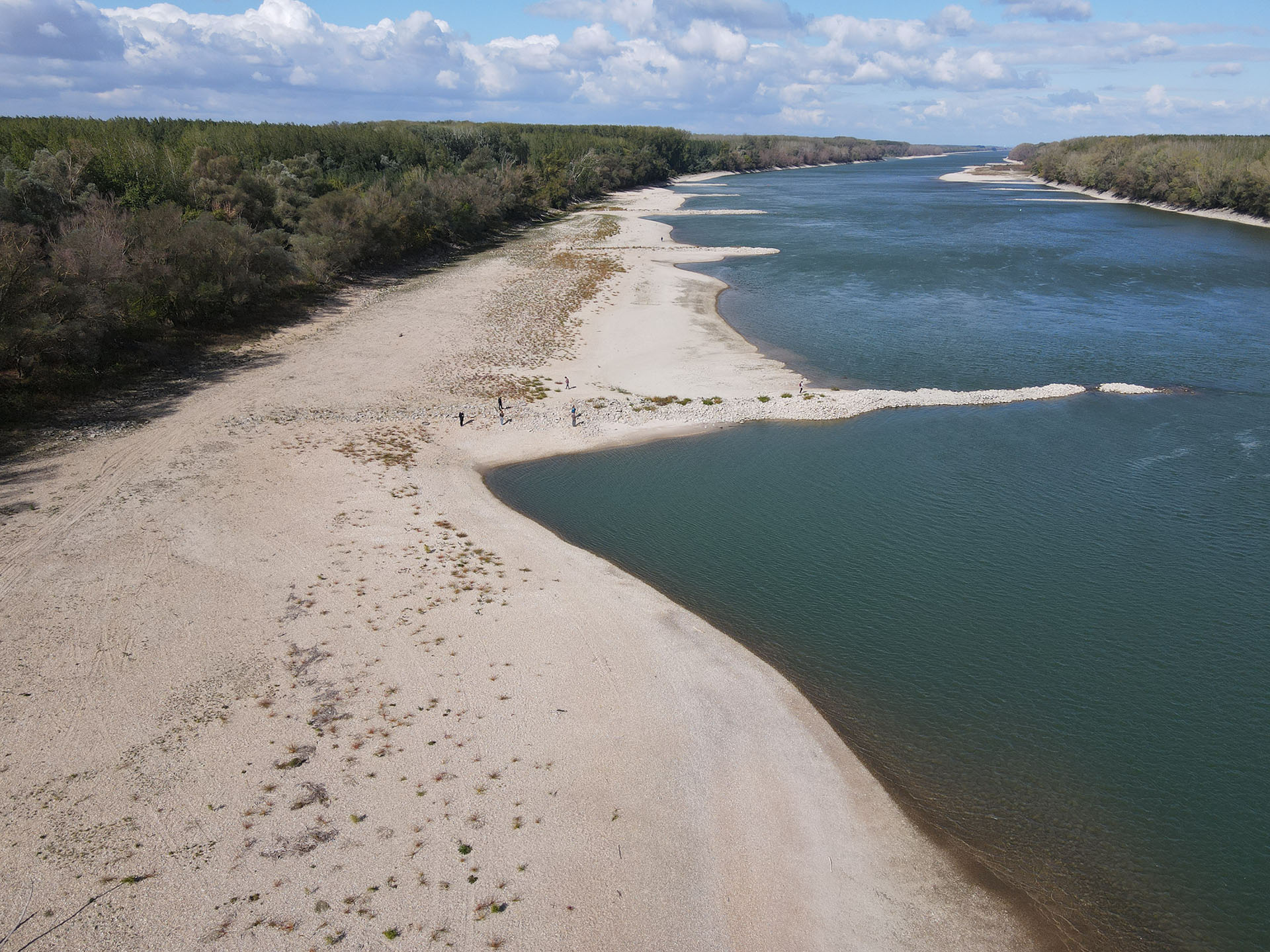
The current low-water conditions gave us an excellent opportunity to inspect most of the existing river-training infrastructure. At the same time, it was striking to see how far we could walk into areas that would normally be covered by the Danube. The exposed riverbed and narrowing of the active channel are changes we can literally see.
Sediment dynamics are different. The movement of bedload – and even more so suspended sediment – is much less visible, yet changes in the sediment regime are fundamental to the long-term development of a river.
This is exactly why iNNO SED focuses on developing innovative and sustainable solutions for sediment management in the #DanubeRiverBasin, combining scientific understanding, environmental and socio-economic considerations, and practical demonstration actions.
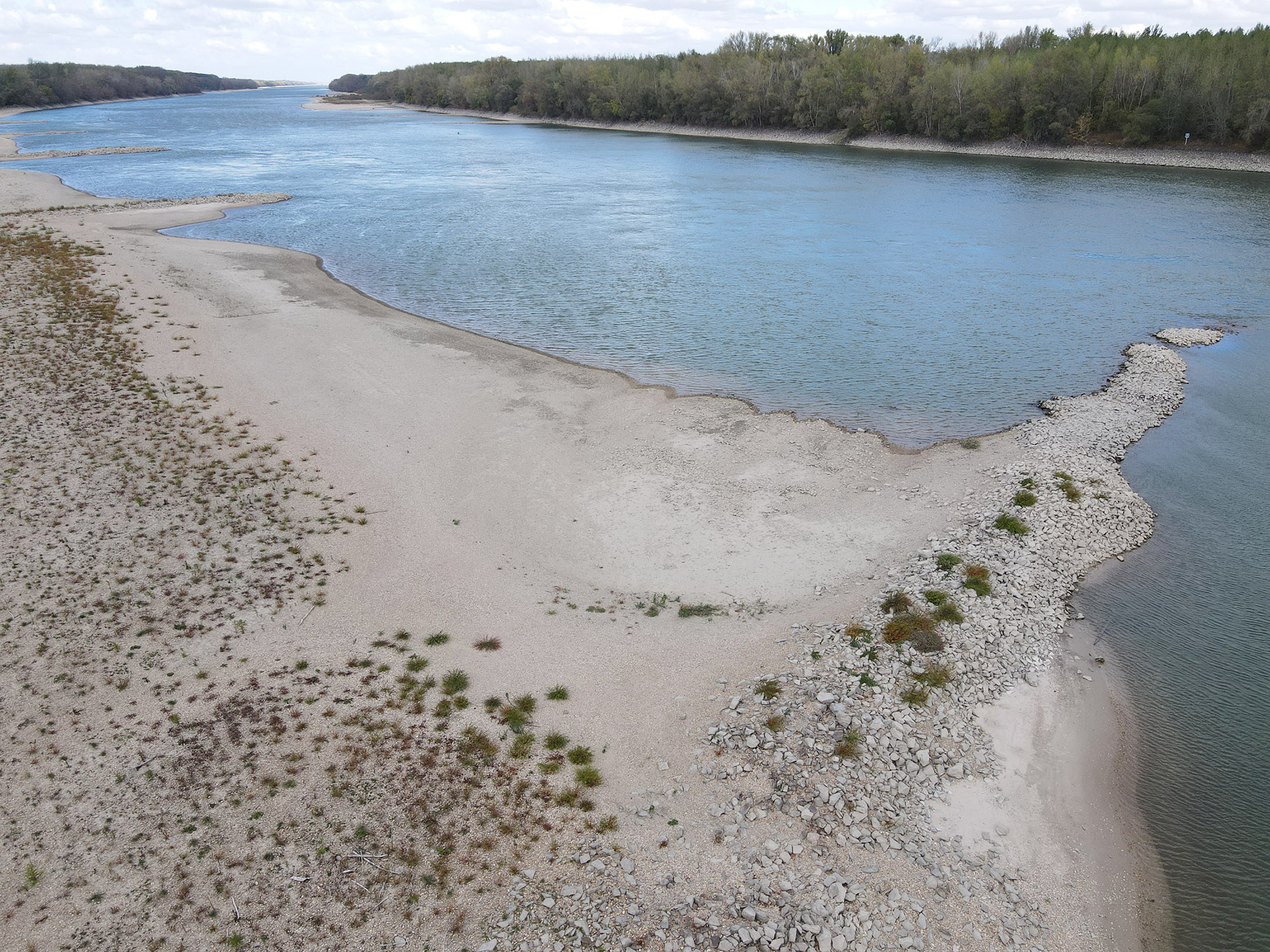
This section of the #Danube has been the subject of many development concepts over the years. Depending on the main objective – flood protection, navigation, river regulation or ecological improvement – different engineering solutions have come to the forefront.
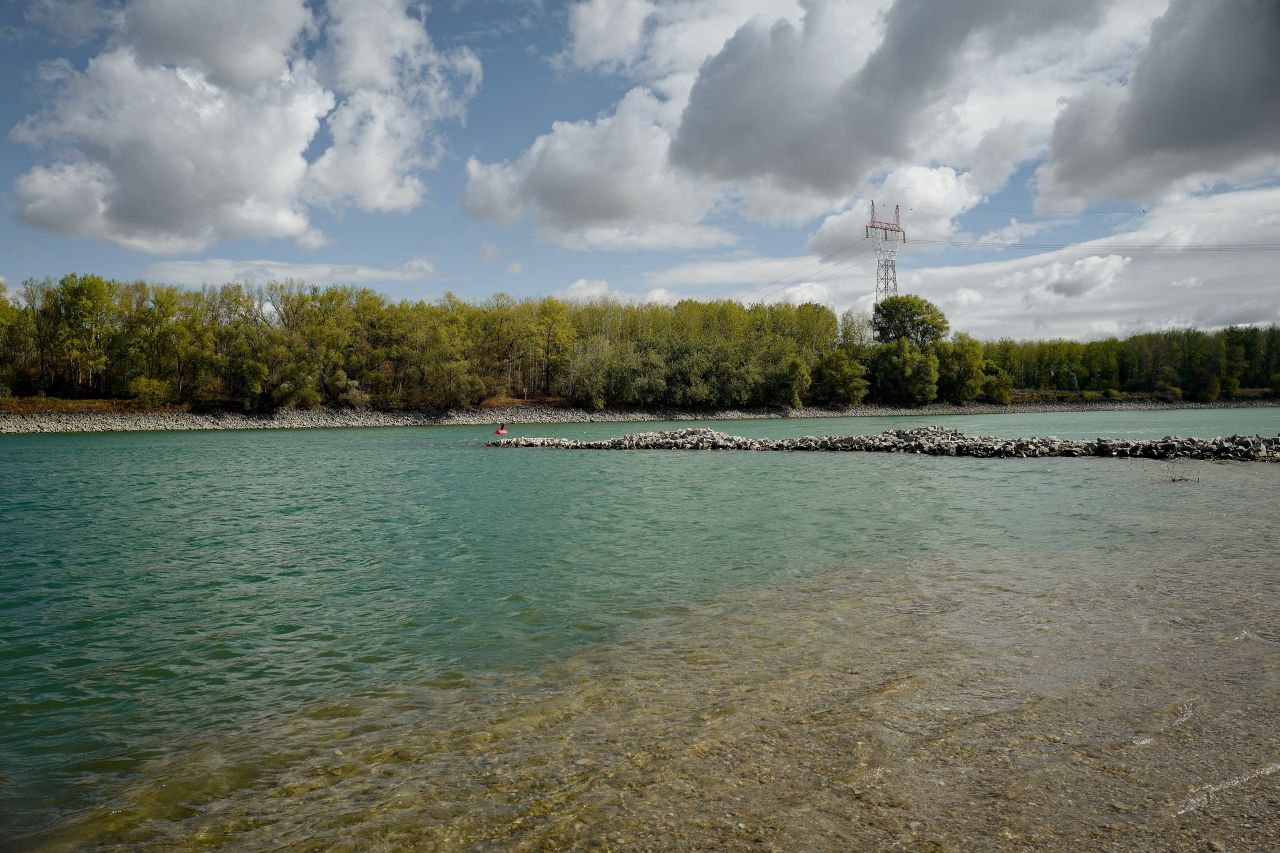
Within iNNO SED, the focus is now clearly on Sediment Management
For the Vámosszabadi section, approximately between Danube rkm 1808 and 1805, the ongoing engineering work includes the preparation of permitting and implementation documentation for the modification of the existing river-training structures, the ecological improvement of a side branch, and the technical basis for the redistribution of excavated sediment.
The planning process is already underway, with contractual milestones covering stakeholder and authority consultations, permitting documentation, and preparation of the implementation and procurement documentation.
What makes this especially important is that iNNO SED does not stop at analysis and modelling: the project aims to translate knowledge into real, implementable sediment-management solutions. Some changes can already be seen in the river landscape, while others require measurements, modelling and long-term observation. Both need to be understood if we want to manage sediment – and the river itself – more sustainably.