News
Testing the HEST at the Iller River
Our partners at TUM were out to test the HES-tool at the Iller River.
30 September 2026
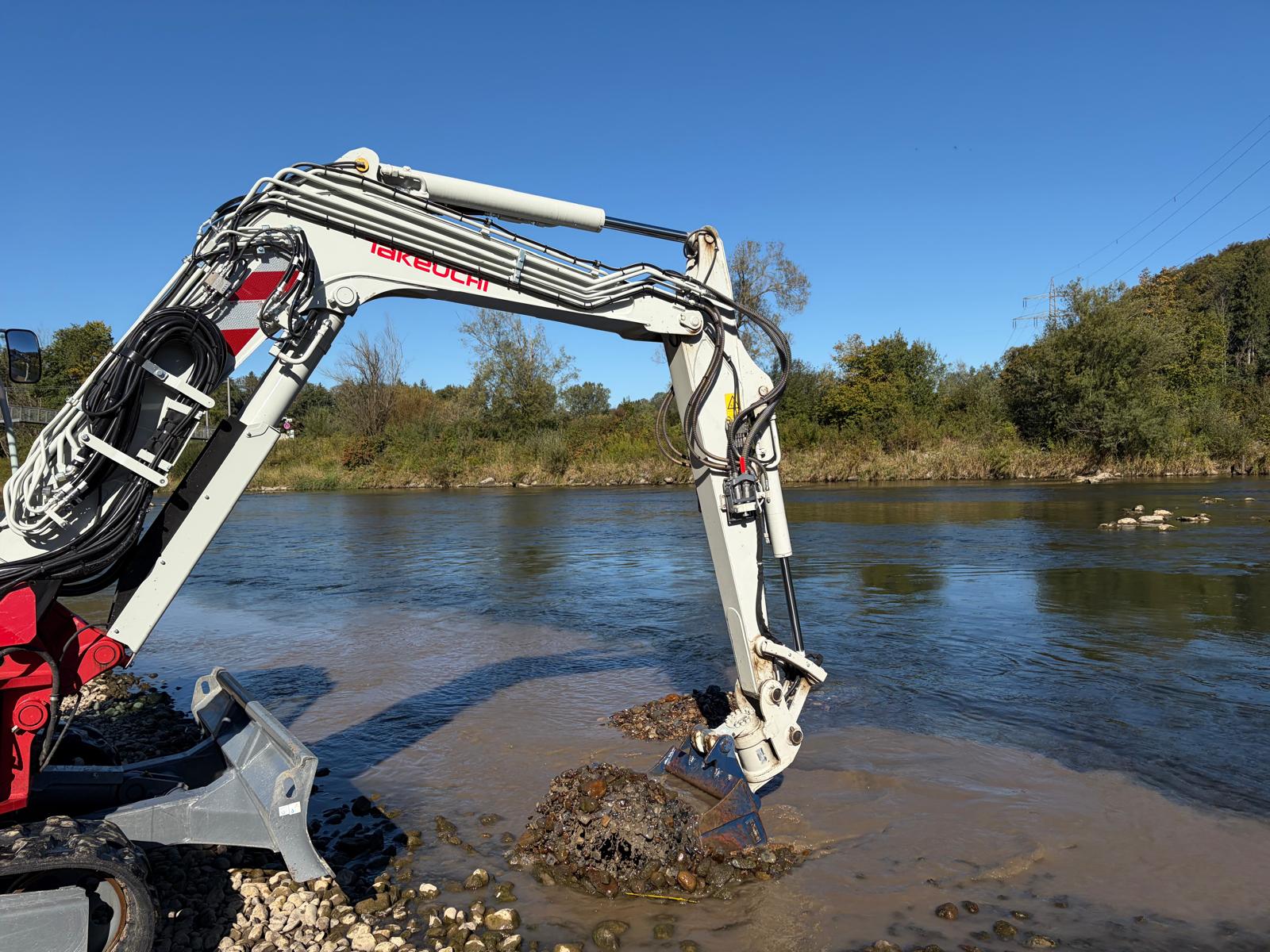
Our partners at TUM (Technical University of Munich) were out at work at Demo Site 1 on the Iller River. As part of their innovative sediment quantity and quality monitoring and modelling tools being developed within iNNO SED, one of the tasks is to test the HydroEcoSedimentary Tool (HEST) at DS1.
HEST was created to monitor fine sediment deposition in interstitial zones of rivers which are not key habitats for gravel-spawning fish, hyporheic invertebrates or even freshwater mussels.
With their work described here, the team wants to demonstrate whether the HEST can be transferred to large gravel-bed rivers, and to assess fine-sediment infiltration into the gravel pore space in a river shaped by active sediment management.
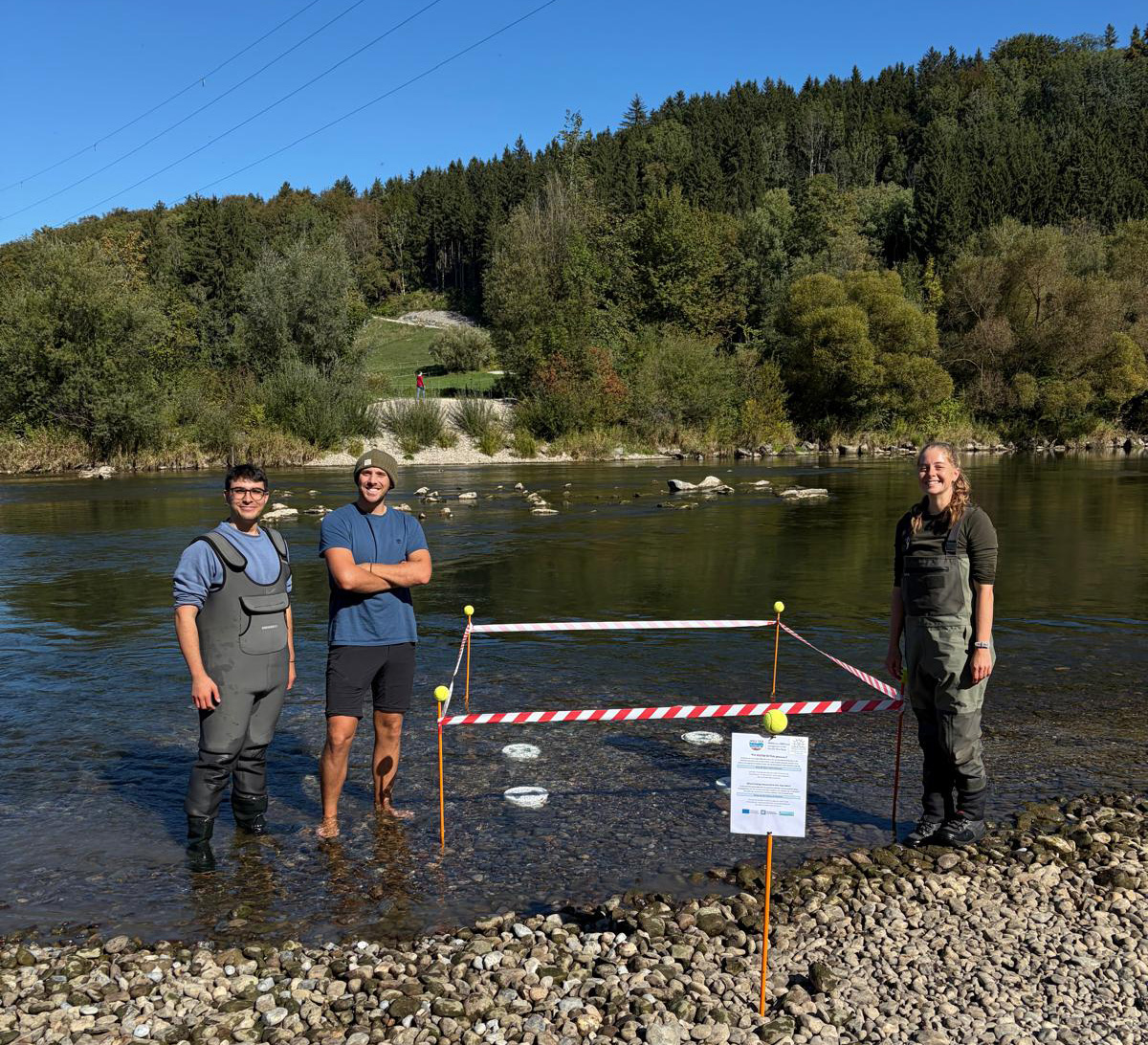
The team implementing the HEST01-buckets, but with a brief moment to show the joy of fieldwork!
The first step was completed on Wednesday, 23 September 2026, when they installed nine HEST buckets in the bed of the Iller at the Legau reach. The team took advantage of the low-flow conditions of about 8 m³/s, which gave good access to the riverbed.
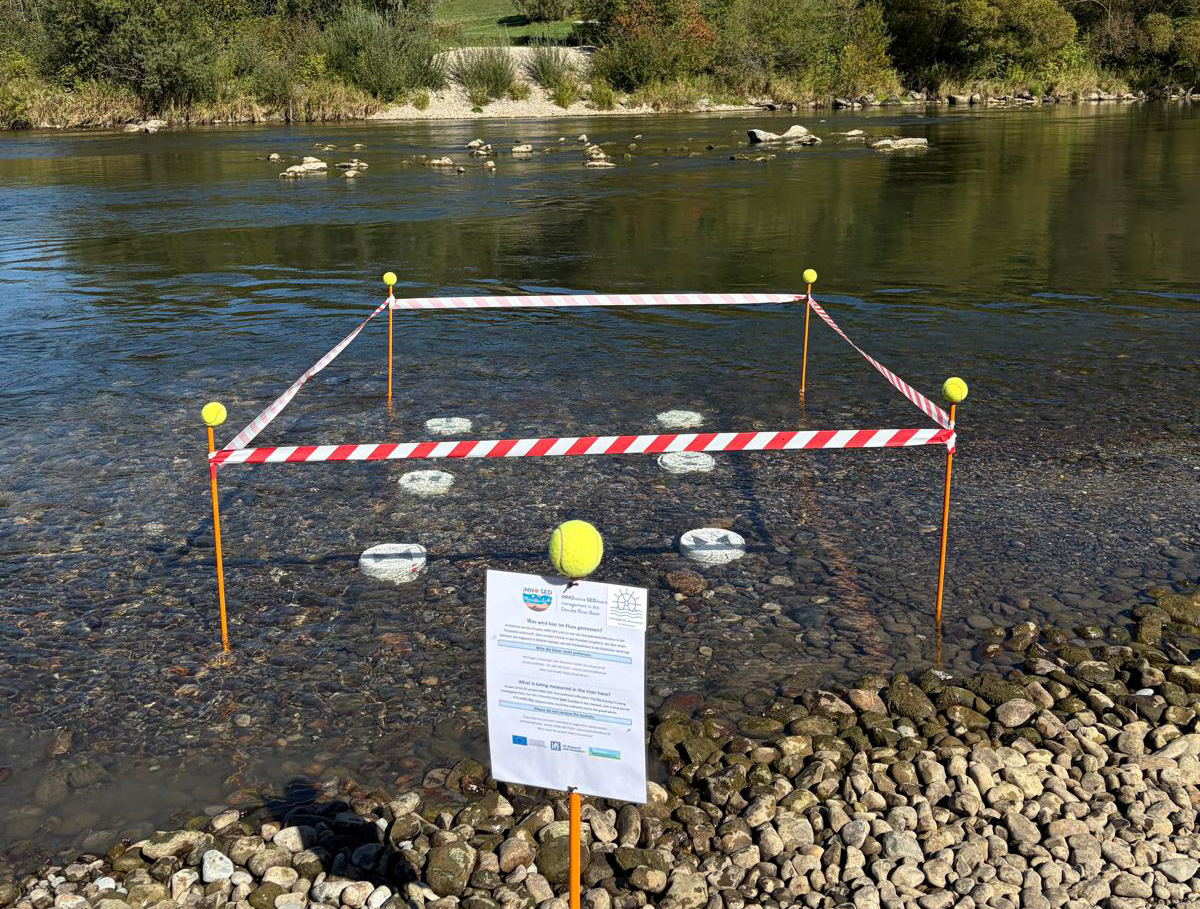
HEST01-buckets after implementation on the left bank of the river.
The buckets are distributed across two locations:
- HEST01: on the left bank, with six buckets to capture both the temporal dynamics of infiltration (by recovering them after different exposure times) and the small-scale in-stream variability.
- HEST02: downstream of an arc-shaped structure on the right side of the river, with three buckets to evaluate how such structures influence fine-sediment infiltration compared with HEST01.
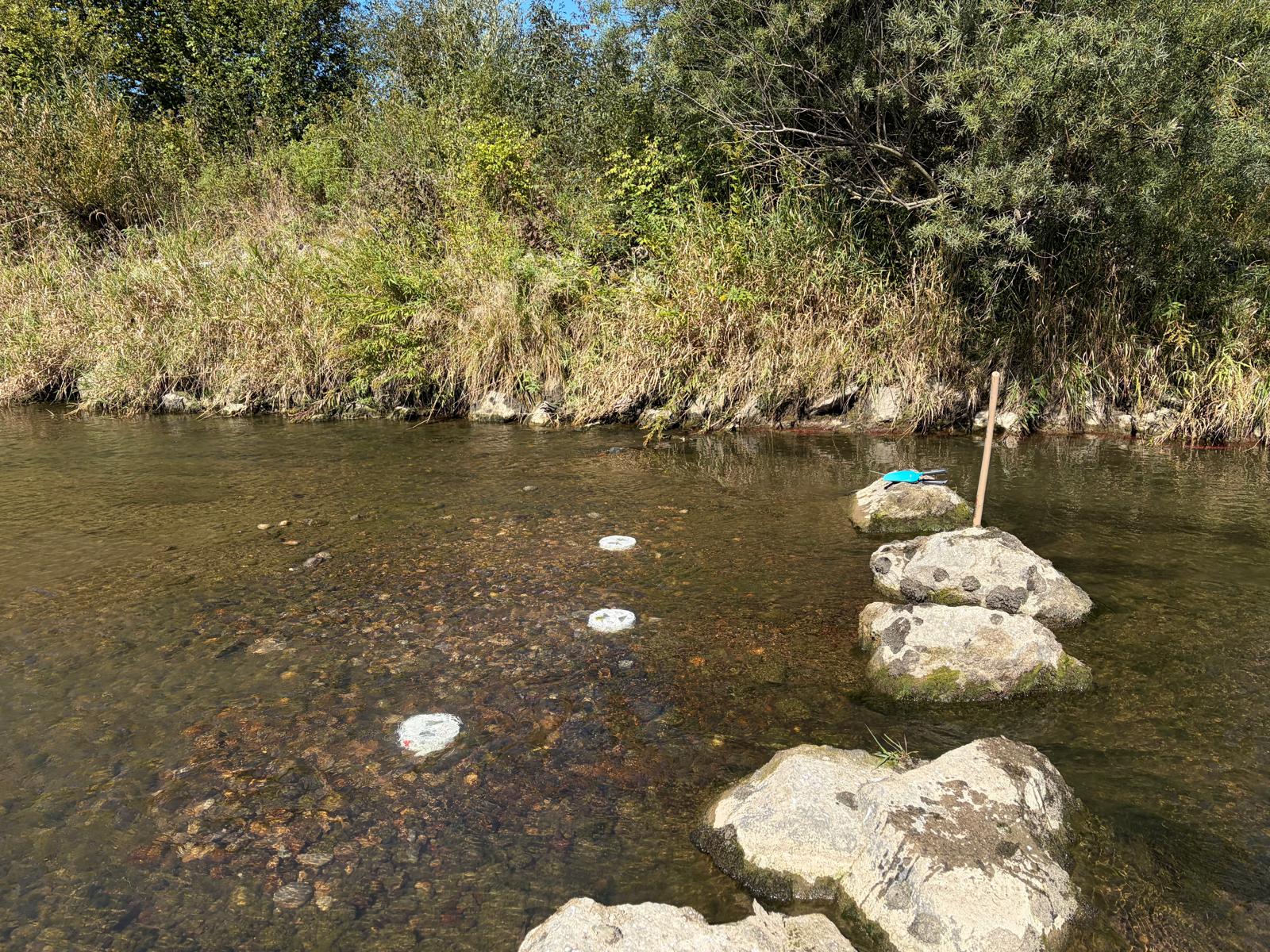
The HEST02-buckets implemented in an arc-shaped structure.
The buckets will stay in the river for the next four to six weeks. Afterwards, we will recover them and determine the fine-sediment infiltration in the laboratory.
Stay tuned for an update when the buckets are recovered!