
Lesson 1: Introduction
Welcome to the first lesson of our Sediment School! This first page should take you no more than 10 minutes to go through and enjoy. We’ve made the language easy as the topic can seem a bit difficult to understand. You can also interact with a few graphics along and finish with a short summary video and a quiz.
Hopefully, you’ll walk away with some new knowledge.
Best of luck!
What are sediments?
In simplest terms, sediments consist of loose pieces of material like pebbles, sand, and mud.
Getting up close, these pieces of material come from broken down rocks and minerals. Each individual piece of sediment is called a ‘grain’.
The word ‘sediment’ comes from Latin meaning “something that settles or sits”. As you will see, this word fits very well.
… and why are sediments important?
Because they’re everywhere and because there’s so much of them! Especially in our rivers.
Whether they may be carried by wind, water, or ice, all sediment grains will eventually fall and settle somewhere. Sometimes in your shoes…

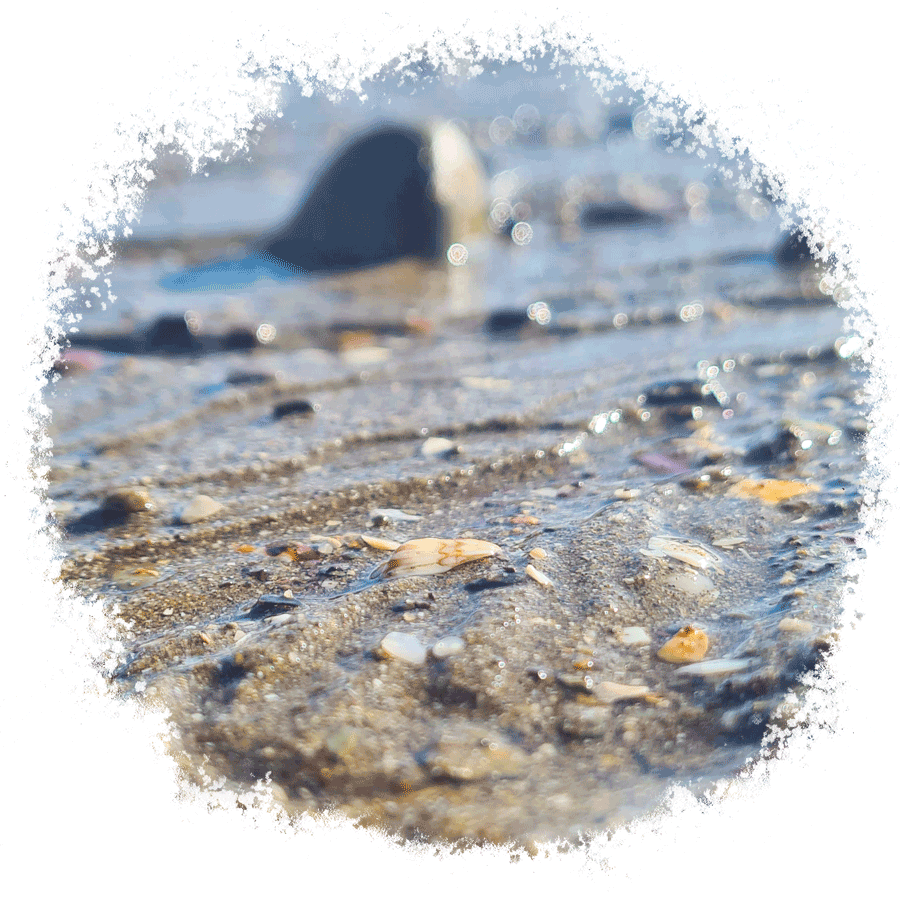
A sediment might be a stone you pick up at a shore. Silt stuck in your shoes. Sand used to form a sandcastle.
But sediments also influence how rivers flow, where ships can sail and the overall quality of the water they’re in.
The tricky part is balance
When there is too much sediment, rivers can clog, flood, become muddy, and shipping channels can fill up so ships have trouble passing. When there is too little sediment, riverbanks and riverbeds can erode, habitats disappear, and even structures like bridges can become unsafe.
In many rivers today, this natural balance is often changed by human activities, such as river regulation, dams, dredging, or building along riverbanks. These activities can speed up the movement of sediment – or slow it down – and in some cases, remove sediments from the natural cycle entirely.
That’s why scientists and engineers study sediments: to understand and manage them in a way that keeps rivers healthy and safe for both people and nature
Click on the hotspots in the image to study the cycle of rivers
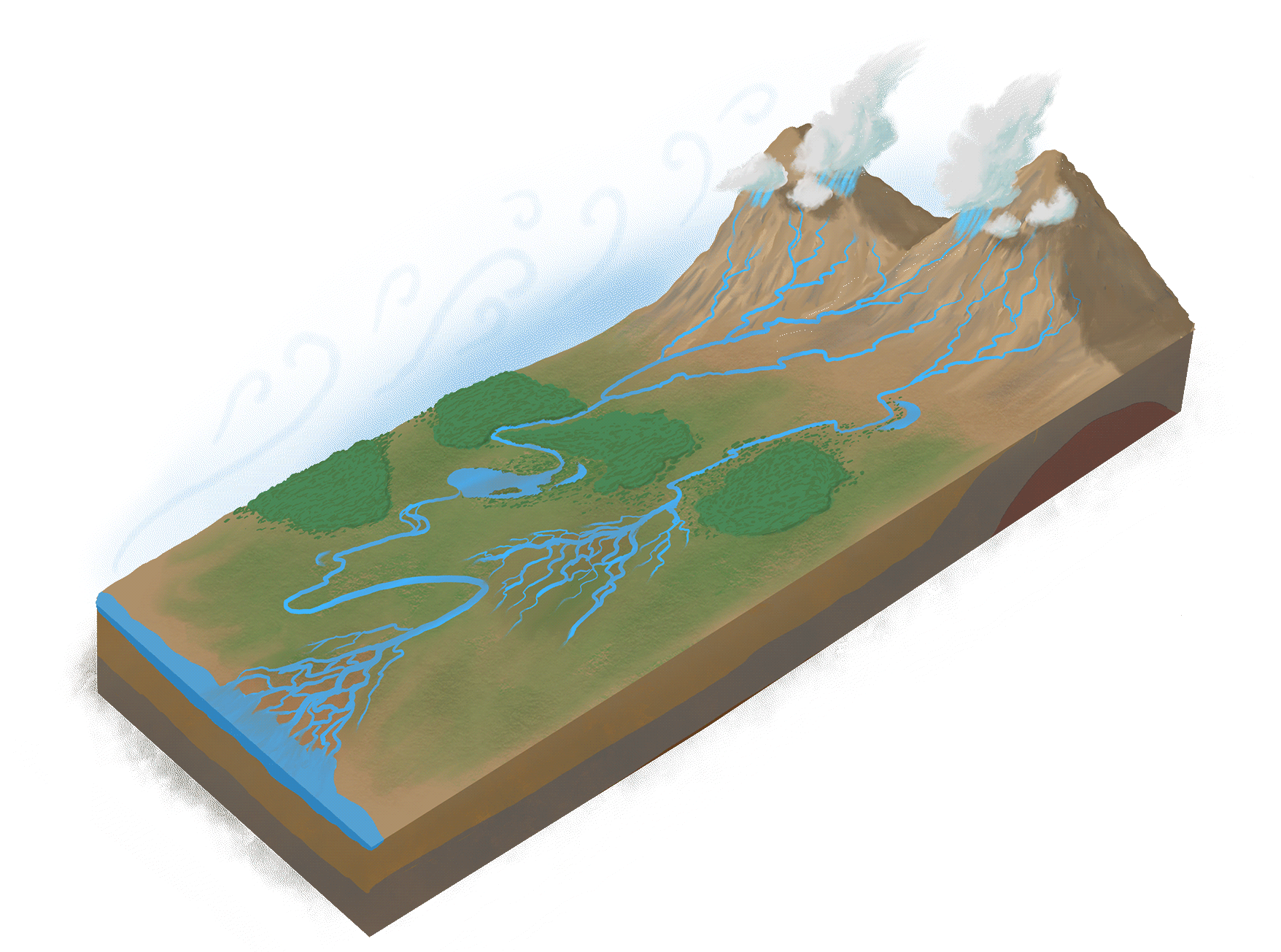
Clouds form easily near and above higher terrain like hills and mountains. If they become dense and big enough, they may start dropping rain, snow or hail.
Rain and meltwater gather as small streams. These further erode the rocks of the mountains or hills; washing them down to lower terrain.
Many smaller streams may combine and become rivers. Larger rivers are more effective at transporting sediments as they have more volume and energy.
Eroded rock material from mountains and hills can provide plenty of nutrients for plants and wildlife. Therefore, forests and shrubs often thrive along riverbanks.
Just as rivers can feed lakes with water and sediments, they may also remove these. As such, we refer to rivers as sources and sinks.
The areas where rivers meet seas or large lakes are called river mouths. Often delta systems, as seen here, form where numerous smaller rivers branch out. The supply of sediment in the river greatly affects the delta.
Surface waters from seas and larger lakes may evaporate and drift water vapour inland with winds. This brings humidity in over land and feeds rainclouds in higher regions.
Sediments eroding from higher terrain can accumulate over long periods of time into kilometres of thick layers. These low-lying regions of accumulated sediments are called sedimentary basins.
Where do sediments come from?
Most sediments come from different kinds of rocks breaking down. Some rocks are already made of sediments, while others…
- come from volcanic activity.
- form when landmasses collide.
- are made by organisms.
Weathering
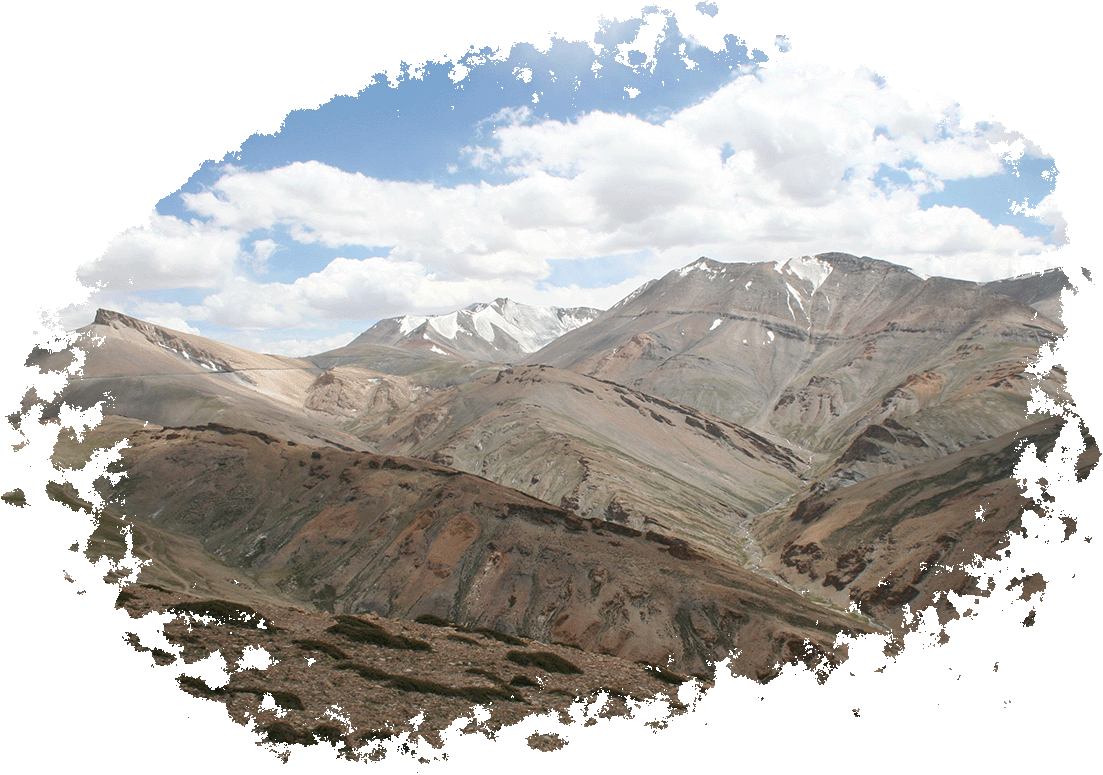
The majority of sediments are created when rocks and minerals are broken down. This process is called weathering.
Many things can weather a rock: Rain, freezing and thawing, gravity, humans, and even plants and animals.
Over the next bit, we will talk a bit more about erosion.
Erosion
So, weathering breaks rocks and minerals apart. Erosion is what happens next: it is the removal and transport of those sediments after they have broken off from the rock or mineral.
Erosion can happen via wind, rain, ice, and gravity, and in some cases, sediments can end up far away from their source.
